 Chat with us
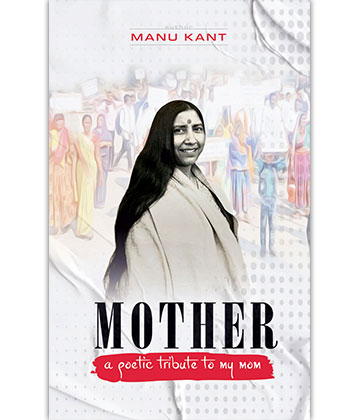
This collection stands at the intersection of private grief and social reality. The death of the mother is not treated as a purely sentimental loss. It constantly collides with class society. The hospital, the restaurant, the liquor shop, the funeral—each space exposes the material conditions in which life and death unfold.
The sharpest moments are where emotion meets class truth. The expensive private hospital where “poor people do not even enter.” The domestic worker Uma, remembered only partially, yet representing an entire invisible labouring mass. The mother worrying about medical bills even on her deathbed. These are not accidental lines. They reveal the underlying structure of capitalism—where care, memory, and even death are mediated by money.
At the same time, the book shows ideological contradiction. The mother appears as a loving individual, yet shaped by liberal and religious consciousness. Rituals, “Ram naam satya hai,” Brahminical ceremony, hope in God—all coexist with fleeting proximity to progressive politics. This is a classic case of spontaneous consciousness: humane, kind, but not historically aligned with the revolutionary class.
The most important contradiction is within the narrator himself. He asks: can a Marxist have a class approach to his dying mother? This tension is real. But dialectically, the personal does not negate the political—it deepens it. The grief ultimately resolves into a clearer commitment: love for one’s mother expands into love for the working class.
In that sense, the work unconsciously echoes the trajectory of Mother—from personal suffering to political awakening. But here the transformation remains incomplete, fragmented, and self-critical. That incompleteness is its honesty.
The final insight of the collection is decisive: individual virtue cannot overcome structural injustice. A “good” life within a bad system remains limited. The poems move from mourning a mother to questioning a world where workers die unremembered, healthcare is commodified, and ideology blunts rebellion.
Thus, the book is not merely a tribute. It is a document of grief under capitalism—raw, contradictory, and moving toward class consciousness, though not fully arriving there.







Book Bazooka Publication बुक बज़ूका पब्लिकेशन
