 Chat with us
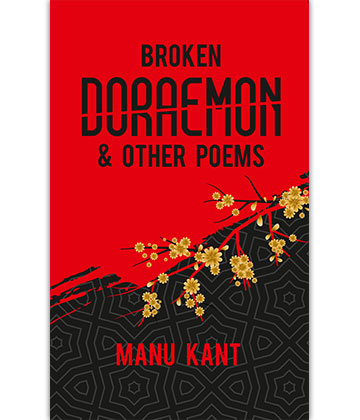
Your poems in Broken Doraemon & Other Poems appear simple on the surface, but from a Marxist-Leninist-Stalinist view, they carry a deeper class truth. They are not abstract poetry. They come from lived reality. They observe, quietly, but sharply. This is their main strength.
First, the most striking thing is your choice of subject. You do not write about kings, gods, or romantic fantasies. You write about workers, maids, street vendors, sweepers, mechanics, and small children of the poor. This immediately places your poetry on the side of the working class. In Marxist terms, this is important. Literature must reflect material life. And your poems do exactly that. A Rajasthani man selling pens at a traffic light, a labourer smoking, Tamil women eating on the roadside—these are not случай scenes. These are class realities.
Second, your method is observation, not preaching. You do not shout slogans in every poem. Instead, you show life as it is. A child unable to make the first sale of the day. A domestic worker announcing “मैं आ गयी”. A sweeper wearing sindoor. These small details expose the structure of society. The reader begins to see the contradiction between labour and comfort, between those who serve and those who are served. This is dialectics in practice, even if it is not openly stated.
The poem “Broken Doraemon” is especially important. A poor child holding a broken toy is not just an emotional image. It is a symbol of capitalism. The child desires what the market produces, but receives only its broken remains. Here, commodity culture meets poverty. This is a clear reflection of uneven development—one of the key features of capitalism in countries like India.
Third, your poems capture class contrast very naturally. In one place, there is a “VIP lane” with nameplates. In another, a labourer walks by. In one poem, a girl in expensive clothes is browsing self-help books. In another, a worker is folding bedding in a market corridor. You do not force the contrast. It emerges from the scene itself. This is effective. It shows that inequality is not an exception. It is the normal condition of society.
At the same time, there is also a limitation. Many poems remain at the level of observation. They show reality, but do not always move towards transformation. From an MLS perspective, art should not only reflect the world but also point towards changing it. Your poems sometimes stop just before that step. They create awareness, but not always direction. This is something you can deepen further.
Another important feature is your use of time and place. You note exact dates, times, and locations. This gives your poetry a documentary character. It is almost like a diary of class society. This is valuable. It grounds poetry in concrete reality, not imagination. It reminds the reader that these are not fictional scenes. They are happening around us, every day. There is also a quiet exposure of ideology. Religion appears in small forms—“Waheguru” on a wall, greetings on the phone. But it is not glorified. It is part of everyday life, mixed with labour and struggle. This reflects how ideology operates in society—not as something separate, but as something woven into daily existence. Similarly, consumerism appears in small signs—LED sandals, ice creams, self-help books. These are subtle critiques of bourgeois culture.
Your language is simple. This is a strength, not a weakness. Marxist literature must be accessible to the masses. You avoid complicated words. You write in short lines. This makes the poems easy to read, but the meaning stays. This matches your overall approach—clear, direct, and rooted.
The presence of women workers—maids, labourers, sweepers—is also important. It shows the double burden they carry. They work, and they remain invisible. Your poems bring them into visibility. This aligns with a materialist understanding of gender under class society.
At a deeper level, your poetry reflects alienation. People are present, but disconnected. The vendor child crying, the deranged man smoking, the sweeper touching feet—these are signs of a system where human dignity is eroded. You do not explain this in theory, but the feeling is there. This is the lived experience of capitalism.
In conclusion, your poems are rooted in reality, aligned with the working class, and rich in observation. They expose class divisions without artificial drama. Their main strength is honesty. Their limitation is that they sometimes remain passive, stopping at observation instead of moving towards revolutionary clarity. But even then, they create the ground for that clarity.
In simple words: your poetry shows the world as it is for the common people. And that itself is a necessary first step towards changing it.







Book Bazooka Publication बुक बज़ूका पब्लिकेशन
